Daily practice (kayaking edition)

I’ve discovered the benefits of daily practice. Quite possibly as the last
human being on Earth, I’ve found out that doing something every day makes you
get better at it.

A few weeks ago, I took a course to learn some basics of freestyle kayaking. At
the moment, I’m not really interested in learning how to run more difficult
whitewater sections. Instead, I want to do more fun stuff on the bits of river
where I already feel comfortable. In my case, “fun stuff” means getting my boat
vertical, pirouetting on the stern, sliding along rocks, and jumping over them.
(Short plug: the kayak school, Outdoordirekt is excellent. Great concept, run by a woman, LGBTQ+ friendly. If you’re in or near Germany and want to learn kayaking, or improve your skills, they’re a great choice.)

Now I’m on a two-week camping vacation on the beach, with my family. The kids
are no longer little, and even though there’s four of them, it’s a very chill
affair. For the first time in literal decades, I can actually decide pretty
freely what I want to do with my day. In fairness, the answers I find tend to
include the words “hammock” and “cold beer” quite frequently.

But I brought a little boat along. It’s a Dagger Centrifuge –
something called a “rodeo boat” when it came out in the mid-2000s. It’s longer
than today’s playboats, but its flat front and stern mean that it performs well
beyond just freestyle waves. You can actually paddle this down a river. The
trade-off is that it’s not quite as easy to get vertical, because the ends have
air in them, and therefore like to float.

Most days during this vacation, I’ve been taking the little boat out for
flatwater practice: Freestyle moves that don’t rely on current to push the
boat, only on the paddler’s technique. It’s honestly a bit frustrating: I know,
in theory, how most of this stuff should work. But in practice, getting all the
little details riight turns out to be supremely difficult. For these moves, you
need exact, sub-second timing on where you put your weight, how you rotate your
body, where you put your paddle and where you move it, and how you manage the
boat’s edges. Get any of these factors wrong, and the move won’t work.
Maddeningly, a lot of the details must be executed exactly opposite to what
I’ve been taught as “proper whitewater technique” for a decade.

Despite the occasional frustration, I’ve now gone out on the water almost every
day for a week, and some things are actually starting to work! I’ve learned to
do Lean Cleans – rotating the boat in a flat circle, without using the paddle! This is an
important foundation for other freestyle techniques. My stern squirts are finally
beginning to work, though I have yet to succeed at turning them into a stern
stall (ie. not just getting the bow up in the air, but actually holding the
boat vertical).

Of course, the technique I’m actually improving most is my roll. A lot of
times, the move fails, and I just tip over. But then, a kayaker can never have
too much rolling practice. All those freestyle moves require significant core
strength, especially if you have to compensate for less-than-perfect execution;
so I get a free core workout with my kayak sessions!

My progress isn’t rapid by any means. I keep having to dial back when
practicing a move, focusing on an easier version or a foundational element
first, before trying again to string all the little bits together. I get
frustrated. When I’m tired, I notice that the moves work significantly less
well than at the beginning of the session.

And yet. Every day, something works a little better. The Lean Cleans, a
challenge at the beginning, have become almost effortless. On the stern
squirts, I can now focus on the finer details, instead of just struggling with
the basics. Sometimes I try a new move, and notice the learning curve ahead.

I’m finally realizing that that learning curve is actually the point.
Everyone thinks the goal is to execute the move I want, perfectly, whenever I
want to; hell, I certainly thought so. But it just became clear to me that I’m
out on clear, turquoise water, in a beautiful corner of the world, with people
I love, and without any pressure. I’m doing something that I’m passionate
about, with no conceivable profit motive — exclusively for the fun of it! (OK,
some of the toddlers at the beach think I’m pretty cool.)

Call me silly, but I feel like I’ve just invented the practice of having fun.
Sea kayaking in Croatia

Our summer vacations in Croatia typically consist of camping on one of the country’s beautiful islands, while doing as little as possible.

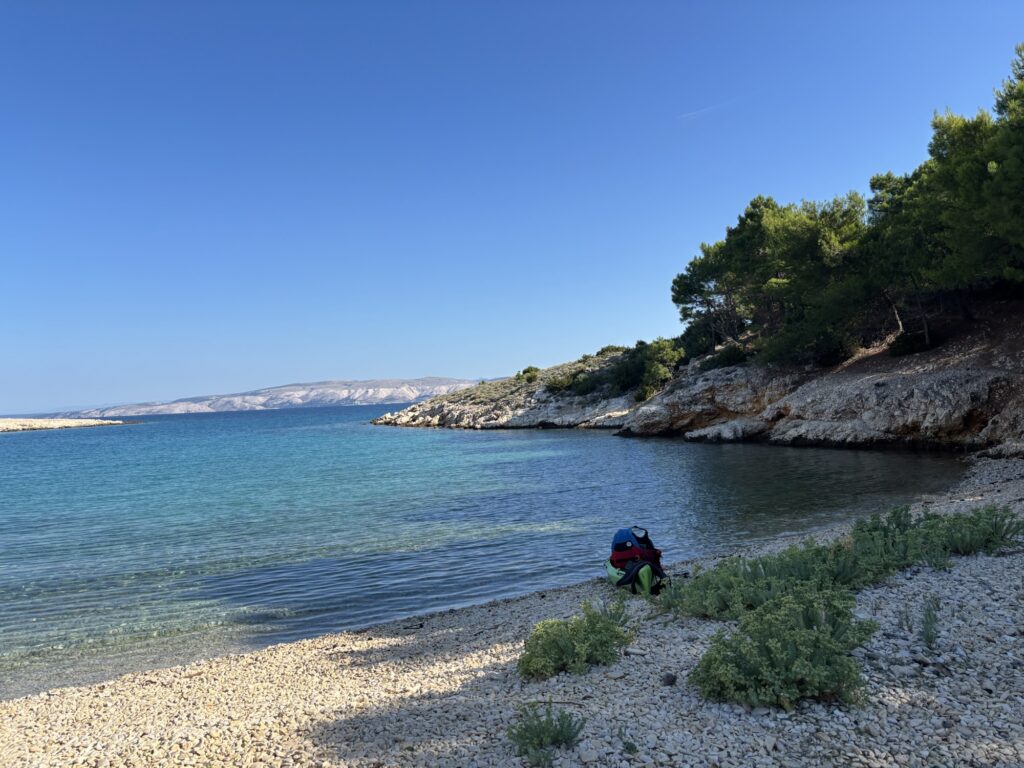
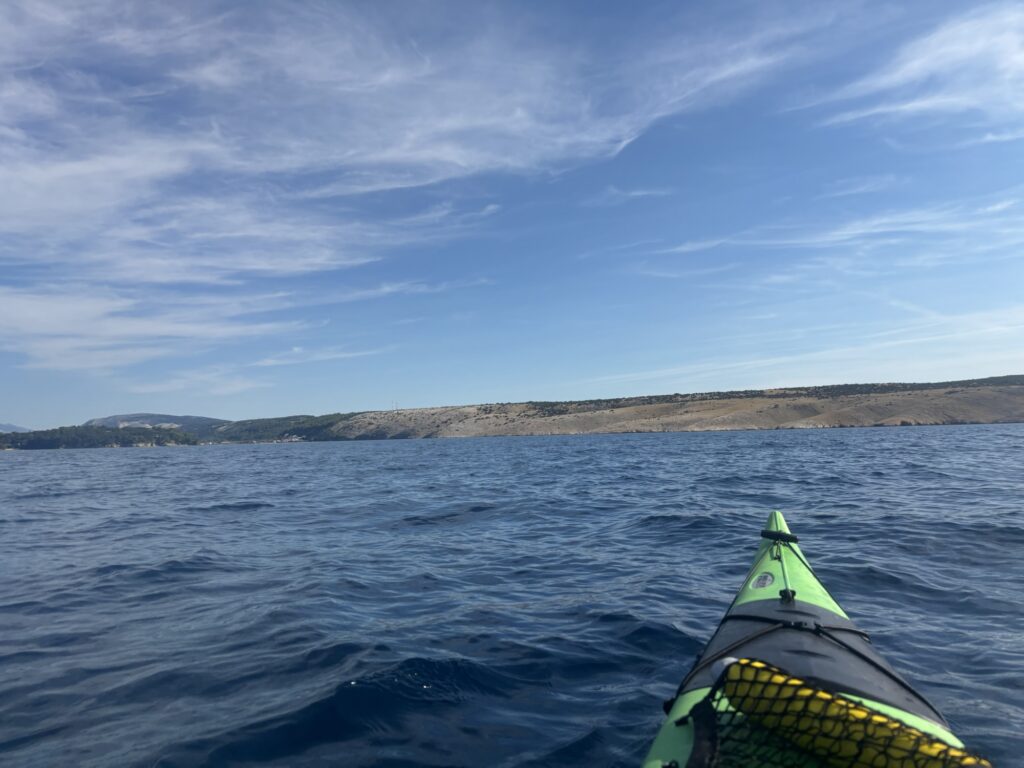
But I got a sea kayak last year, and this is a great area for it. Clear turquoise water, mostly calm seas, lots of little beaches everywhere. Just perfect. So, once I felt I’d gotten enough rest and wanted some action, I took the kayak for a little overnight trip.

View of the sea, shot over the bow of a green sea kayak

I’m still gathering experience with this sort of thing. Wanting to travel as light as possible, I took just the basics:

  • a light sleeping bag
  • a hammock (the ground around here tends towards the spiky, and it’s hard to find a level patch
  • bottled water for two days, six liters in total
  • camping stove
  • food: instant ramen, instant porridge, instant coffee, and a few muesli bars
  • a shirt, plus a down jacket just in case

I had to wait a few days for the right combination of stable weather and the absence of social events. When the window came, I started in the afternoon, when the heat had let off a little. Paddled along the coast for three hours. I’m a fairly novice sea kayaker, but I’ve had my butt kicked by enough whitewater rivers to deeply respect the water. So I wore a PFD (life jacket), and stuck close to land for the most part. I should probably take a few trips with more experienced paddlers to learn their ways…

There were plenty of little pleasure boats out there, but they left me alone. At a few points along the way, when rounding a cape, the wind and wave situation changed. That sometimes felt stressful, even though I certainly wasn’t in danger of flipping. Still, it was a bit of a mental challenge. (I can roll a kayak fine, but I’d prefer not to test this in open water with a boat filled with luggage.)

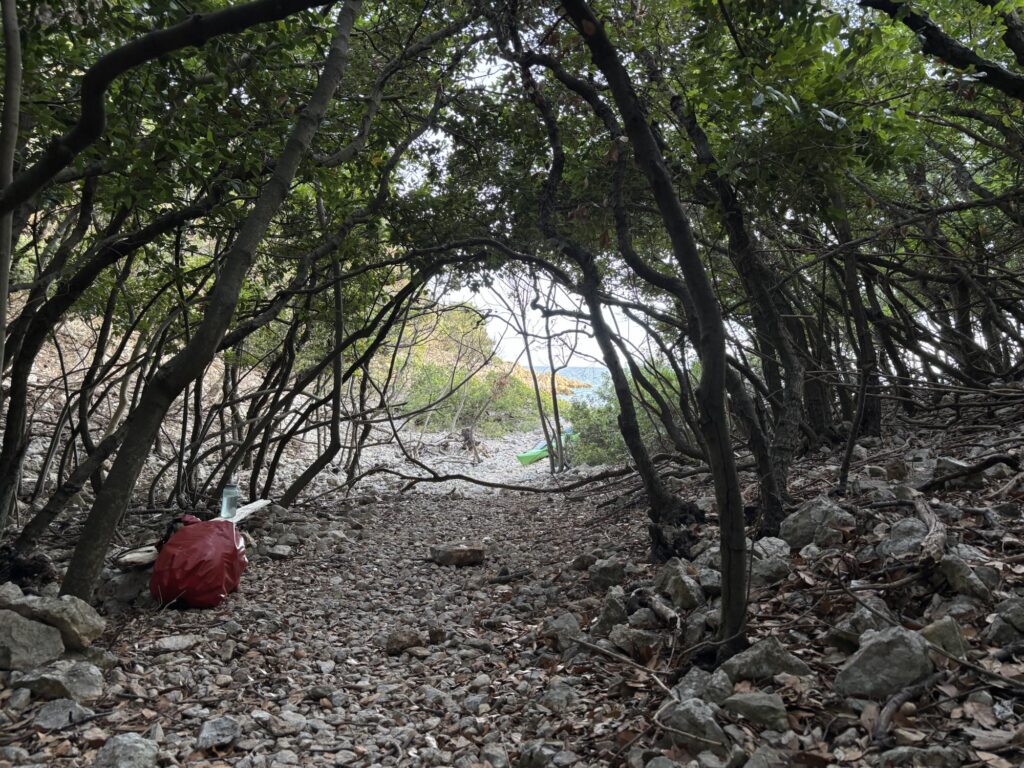
In a low forest, looking out toward the sea

I saw quite a few animals. Glistening swarms of sardines jumping. Various seagulls and other birds. A flying fish – something I’d never seen before. And, as the high point, dolphins!

One dolphin surfaced maybe 20 meters from my boat. I noticed it when it made a noise that frankly sounded a bit rude. It swam in parallel with me for a minute or two, surfacing periodically and breathing. Amazing! Later, I saw some more dolphins, jumping and playing. They were quite far away though, at least 500 meters.

Around 18:30, the wind picked up a bit, and I was on a more exposed part of the coastline. I still had a bit of a way to my intended night spot. But the wind and the waves were pushing me towards the shore, which was lined with rows of very pointy rocks. Also, I was getting tired.

So I decided to play it safe, and pulled into the first little bay that presented itself. It turned out to be a good choice! It was lonely, and behind the immediate beach, there was a little depression. So I landed, hid the boat in the depression, and looked for a place to discreetly string up my hammock.

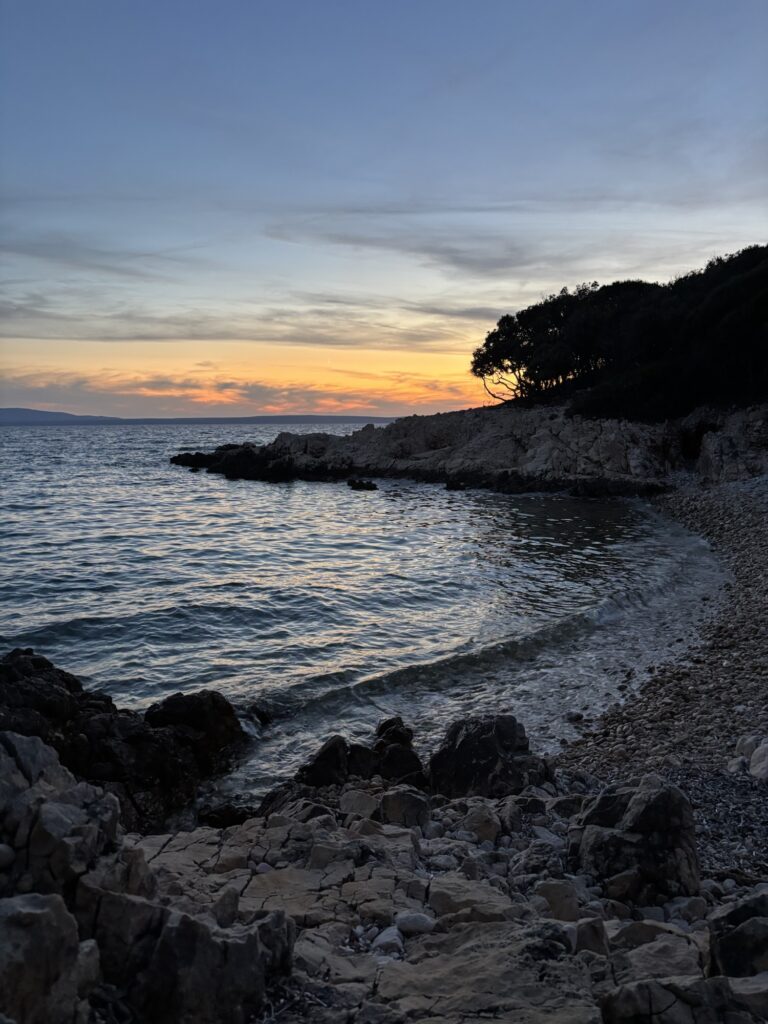
Sunset over a rocky beach

Why the secrecy? Well, this is a touristy area, and the Croatians have wisely decided to ban wild camping. So I tried to avoid being seen, but a few boats did pass by that probably noticed me.

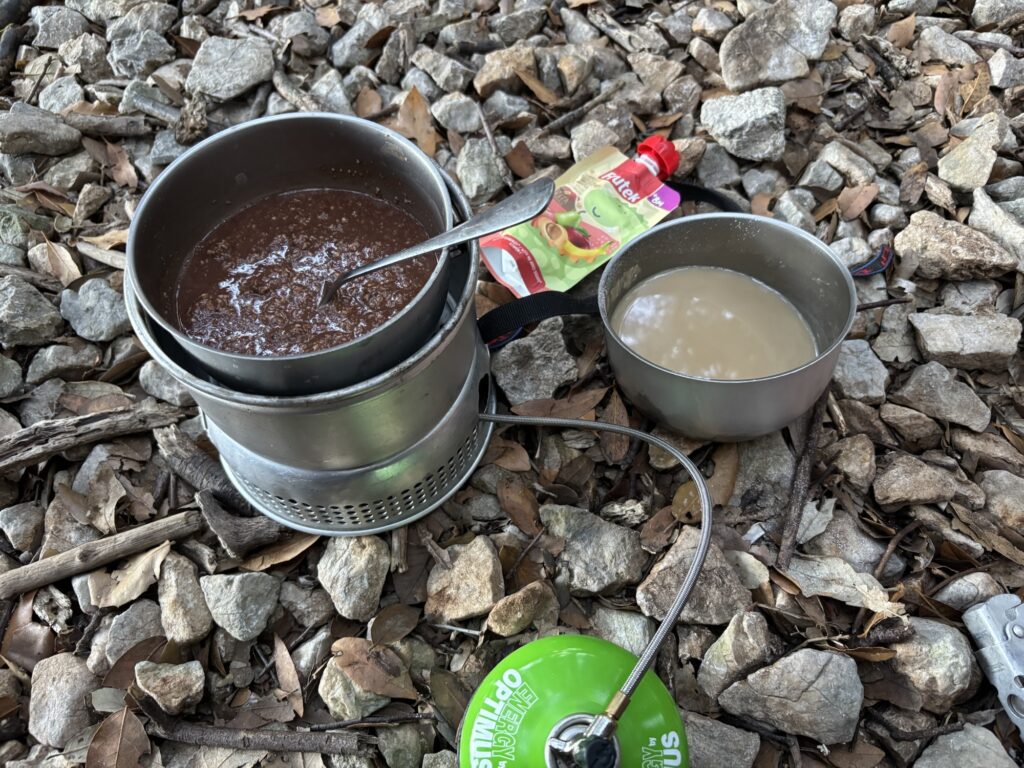
A Trangia camping stove, with chocolate porridge bubbling in the pot

I made my dinner, and watched the sunset on the beach. It was a clear night, and the stars were beautiful! Eventually, I retired to my hammock.

The night was a bit shit. I was woken up around 2am by a motor boat that was passing very slowly, shining a questioning light in my direction. Either one of the boats from earlier had ratted me out, or it was a routine inspection. In either case, I felt a little paranoid. The boat left eventually, though — only to come back two hours later.

Hammocks aren’t great for sleeping in, and it was getting cold by now. Add the excitement of hiding from the rangers, and the whole affair wasn’t very restful. In the end, I put on my down jacket and crawled back into the sleeping bag for another couple of hours.

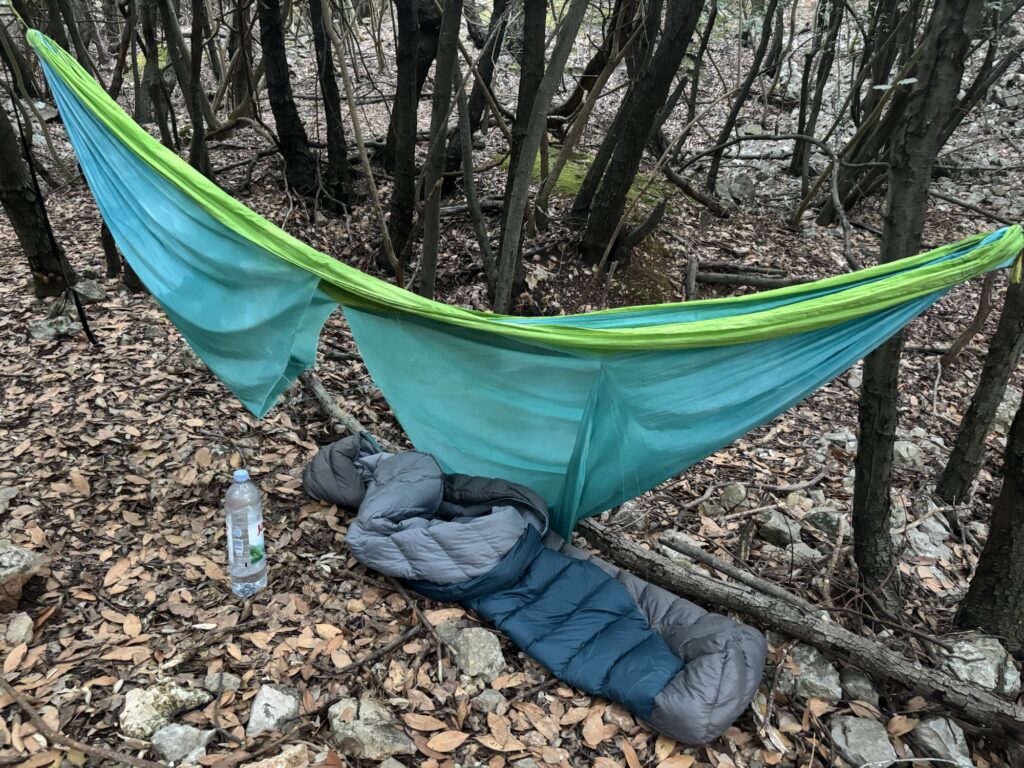
A sleeping bag lying on the ground, underneath a ripped hammock

Around 7am I was debating whether to get up, or try to sleep some more, when my hammock made the decision for me, and simply ripped apart under me, lowering me gently to the ground. So I got up, had a little swim, and made breakfast.

Striking camp was a quick process. Of course, I made sure to take all my trash, and leave no trace behind. Then I got into my boat, and went back the way I had come.

The night took its toll, and I had to take a break every hour or so, seeing a few more lovely beaches. When I arrived home, I dropped into the family hammock, and enjoyed some well-deserved rest.